
 0 Likes
 0
Views
0
Views
 Written by - Vivek
 Introduction
Message marketing in pharmacies is one of the most underused yet highest-performing channels in pharmacy digital marketing today. While most UK pharmacies are still relying on word of mouth or a basic social media presence, forward-thinking independents and small pharmacy groups are seeing open rates above 90% — simply by sending the right text to the right patient at the right time.
This guide covers what UK pharmacies need to know before launching an message campaign: the compliance rules that govern it, the tools that make it manageable, and the real results pharmacies are achieving when they get the strategy right.
1.Why Message Marketing Works for UK Pharmacies
Email open rates average around 20–30%. Message open rates regularly sit at 90–98%, with most messages read within three minutes of delivery. For time-sensitive pharmacy communications—prescription reminders, flu jab appointment slots, and seasonal health campaigns—speed and reach are hard to replicate through any other channel.
UK pharmacies, whether NHS-contracted, private, or a combination of both, serve a patient base that is often older, health-conscious, and accustomed to receiving SMS from healthcare providers. That pre-existing trust makes the channel unusually receptive.
Beyond open rates, message marketing in pharmacies delivers measurable commercial outcomes
-
Higher prescription collection rates through reminder messages
-
Increased uptake of private services like travel vaccinations, blood pressure checks, and weight management consultations
-
Repeat footfall from seasonal campaigns (flu, allergy, winter health)
-
Stronger patient retention for pharmacies competing with online dispensaries

2. The Rules: Message Compliance for UK Pharmacies
Before any campaign goes live, UK pharmacies must meet a specific set of legal and regulatory requirements. Getting this wrong can mean ICO fines, reputational damage, and in some cases, regulatory action from the GPhC or NHS commissioners.
ICO and UK GDPR
The Information Commissioner’s Office (ICO) governs direct marketing by text message under the Privacy and Electronic Communications Regulations (PECR) alongside UK GDPR. The rules for pharmacies are clear:
Consent is required
Pharmacies cannot send marketing SMS to patients without explicit, freely given consent. This means patients must actively opt in—pre-ticked boxes or implied consent is not sufficient.
Consent must be specific
A patient consenting to appointment reminders has not consented to promotional messages about your private services. Each purpose needs its own consent capture.
Opt-out must be simple
Every marketing SMS must include a clear, functioning opt-out mechanism—typically “Reply STOP to unsubscribe.” Once a patient opts out, they must be removed promptly.
Records must be kept
Pharmacies must be able to demonstrate when and how consent was obtained. This means maintaining a consent log that can be produced in the event of an ICO investigation.
NHS Contractors: Additional Considerations
For pharmacies operating under an NHS contract, message marketing that relates to NHS services—such as reminders to collect NHS prescriptions—sits in a different category from commercial marketing. These operational messages can be sent without marketing consent, provided they are genuinely functional rather than promotional.
However, using NHS patient data to market private services is a different matter entirely. The two must remain clearly separated. NHS patient data cannot be used to target patients with commercial offers without separate consent obtained for that specific purpose.
Pharmacies participating in the NHS App ecosystem or integrated with NHS Digital systems should also ensure their SMS practices align with any data processing agreements in place with NHS England.
MHRA Guidance
The Medicines and Healthcare products Regulatory Agency (MHRA) prohibits the direct advertising of prescription-only medicines (POMs) to patients. Any SMS campaign that references specific prescription medicines — even indirectly — risks falling foul of MHRA advertising rules. Campaigns should focus on services, health outcomes, and appointment availability rather than specific medicines.
ICO Registration
Any pharmacy collecting and processing patient personal data for marketing purposes must be registered with the ICO. Failure to register is itself an offence, separate from any GDPR breach.
3.Building a Compliant Message Consent Process
The consent capture process needs to be built before any SMS campaign launches. Common capture points for UK pharmacies include:
At the counter or consultation room
there is a paper or digital form asking patients if they wish to receive health updates and service reminders by SMS, with separate checkboxes for each category.
On the pharmacy website
there is a newsletter or updates sign-up that clearly explains what patients are consenting to receive.
Via the dispensing or PMR system
many patient medication record systems now allow consent flags to be added directly to patient records, which simplifies segmentation when it comes to campaign delivery.
During private service bookings
patients booking travel vaccines, ear wax removal, or private consultations represent a warm, engaged audience. Consent captured at booking is highly relevant and more likely to yield engaged SMS subscribers.

4. The Tools: Message Platforms Suited to UK Pharmacy
Choosing the right SMS platform matters for compliance, deliverability, and ease of use. The best tools for pharmacy message marketing in the UK offer the following:
-
UK GDPR-compliant opt-out management
-
Integration with dispensing or booking systems (or CSV import for simpler setups)
-
Scheduled sends and automated triggers
-
Reporting on delivery rates, opt-outs, and conversions
-
Dedicated short codes or branded sender IDs
Platforms commonly used in UK healthcare and pharmacy contexts include Textlocal (now part of Infobip), MessageBird, Esendex, and SimpleTexting. Each has different pricing structures — most operate on a per-message credit model — and varying levels of integration capability.
For pharmacies working with a pharmacy digital marketing partner like PharmaEscalator, the platform selection is typically managed as part of the wider digital strategy, with campaign setup, consent architecture, and performance tracking built in from the start.
5.SMS Campaign Types That Work for Pharmacies
Prescription Reminders
The highest-volume, lowest-friction SMS use case. A simple automated message sent 24–48 hours before a repeat prescription is due for collection significantly reduces the number of uncollected prescriptions and improves patient outcomes. This is an operational message rather than marketing in most cases, but combined with a soft CTA — such as mentioning a new service available in the pharmacy — it can serve a dual purpose.
On the pharmacy websiteService Promotion
Flu jab season, travel vaccination campaigns, new menopause support clinics, private blood tests — these are all highly suited to targeted SMS. With a consented list segmented by age, health interest, or previous service use, pharmacies can send a short, relevant message that converts.
A well-structured service message follows a simple format: the service name, a brief benefit statement, a booking link or phone number, and an opt-out instruction. Under 160 characters where possible. No medical jargon.
Health Awareness Campaigns
World Diabetes Day, No Smoking Day, Allergy Awareness Week — these NHS-aligned awareness hooks give pharmacies a reason to contact patients that feels educational rather than promotional. Linking to a pharmacy blog post or landing page as part of the SMS increases both time on site and conversion to consultations.
Appointment Confirmations and Follow-Ups
For pharmacies offering private consultations—blood pressure checks, weight management, and NHS health checks—automated message confirmations and follow-up messages after the appointment help reduce no-shows and build the kind of continuity that drives repeat bookings.

6. PharmaEscalator Results: What Message Marketing Achieves for UK Pharmacies
PharmaEscalator works with independent pharmacies and small pharmacy groups across the UK to build digital marketing strategies that combine message with SEO, paid search, and content marketing. The results from SMS campaigns managed as part of an integrated pharmacy digital marketing strategy consistently outperform single-channel approaches.
Pharmacies that combine an SMS list-building strategy with an optimised website see significantly stronger returns from both channels. A patient who lands on a pharmacy’s website from an organic search, books a travel vaccination, and opts in to SMS updates at that point becomes a high-value repeat visitor—returning for services they might otherwise have booked elsewhere.
Key results from integrated SMS and digital strategies for UK pharmacies include:
-
Increased prescription collection rates following automated reminder campaigns
-
Higher private service booking rates during seasonal health campaigns
-
Improved patient retention metrics compared to pharmacies relying on footfall alone
-
Greater return on ad spend for pharmacies running paid search alongside warm SMS retargeting
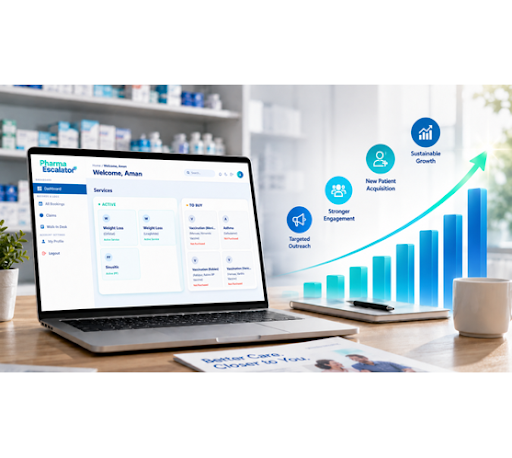
The most significant results come not from messages in isolation but from SMS working as one layer in a broader pharmacy digital marketing strategy—where patient acquisition happens through SEO and PPC, and patient retention and reactivation are handled through messages and email.
7.Common Mistakes UK Pharmacies Make with Message Marketing
Sending without proper consent
The most common compliance failure. Assuming that because someone is a patient, you can market to them by text is incorrect. Consent must be explicit and specific.
Using a generic sender name
Patients are more likely to engage with a message from “CityPharmacy” than from a random five-digit number. Branded sender IDs improve open rates and trust.
Sending too frequently
Messages works because it is seen as a premium, low-frequency channel. Pharmacies that send weekly messages burn out their list quickly. Monthly or seasonal campaigns — tied to a genuine health event or service update — perform far better.
Not segmenting.
For pharmacies offering private consultations—blood pressure checks, weight management, and NHS health checks—automated message confirmations and follow-up messages after the appointment help reduce no-shows and build the kind of continuity that drives repeat bookings.
Ignoring the data.
Delivery rates, opt-out rates, and click-through rates on SMS campaigns tell you a great deal about list health and message quality. Pharmacies that review this data and iterate on their campaigns see compounding improvements over time.

8.Getting Started: A Practical Checklist for UK Pharmacies
Before sending your first marketing SMS, work through this checklist:
Compliance
-
ICO registration confirmed and up to date
-
Separate consent captured for marketing SMS (distinct from clinical/operational messages)
-
Consent records stored and retrievable
-
Opt-out mechanism in place on all campaigns
Platform
-
UK-based or UK GDPR-compliant SMS provider selected
-
Branded sender ID set up
-
Test messages sent and received correctly
Strategy
-
Campaign calendar mapped to seasonal health events and pharmacy service launches
-
Audience segments defined (by service interest, age group, or prior engagement)
-
CTA and landing page or booking link confirmed for each campaign
Measurement
-
Delivery rate baseline established
-
Opt-out rate monitored post-send
-
Booking or footfall uplift tracked in the week following each campaign
Frequently Asked Questions
What is message marketing in pharmacies, and why does it matter for UK pharmacies?
Message marketing in pharmacies means sending targeted, consent-based text messages to patients to promote health services, share appointment reminders, and deliver seasonal health campaigns. For UK pharmacies facing increasing competition from online dispensaries, SMS offers open rates above 90% — making it one of the most effective tools in pharmacy digital marketing today.
.
Is marketing via messages for UK pharmacies legal under the UK GDPR and PECR?
Yes, marketing via messaging is legal for UK pharmacies, provided they follow ICO guidance under the UK GDPR and PECR. Pharmacies must obtain explicit opt-in consent before sending any marketing messages, include a clear opt-out in every SMS, and maintain records of when and how consent was collected. Pharmacies unsure about their compliance setup can work with a pharmacy digital marketing agency like PharmaEscalator to audit and build a compliant SMS framework from the ground up.
Can UK pharmacies use NHS patient data to promote private services via messaging?
No. NHS patient data cannot be used to market private services. The two must be kept entirely separate, with distinct consent obtained for private service marketing. Pharmacies operating across both NHS and private services need clearly separated consent processes — something PharmaEscalator regularly helps pharmacy clients set up as part of their wider digital strategy.
What types of message campaigns work best for pharmacy digital marketing?
The highest-performing SMS campaigns for UK pharmacies include prescription collection reminders, flu jab and seasonal vaccination promotions, private service announcements such as travel vaccines or blood pressure checks, and health awareness campaigns tied to NHS calendar events. When combined with SEO-optimised landing pages and booking systems, these campaigns produce measurable uplift in both footfall and private service revenue.
How does message marketing fit into a wider pharmacy digital marketing strategy?
Messages work best as a retention and reactivation channel within a broader strategy. Patients are typically acquired through organic search, paid ads, or walk-ins, then moved onto an SMS list at a consent capture point such as a service booking or counter interaction. From there, targeted SMS campaigns bring them back for repeat services. PharmaEscalator builds these integrated strategies for UK pharmacies, combining SEO, content marketing, and SMS to drive compounding results across all channels.
What results do UK pharmacies see from message marketing campaigns?
UK pharmacies that use messages as part of an integrated digital marketing strategy consistently report higher prescription collection rates, increased private service bookings during campaign periods, and stronger patient retention over time. The strongest results come when messages are not used in isolation but layered with an optimized website, local SEO, and targeted content—the approach PharmaEscalator uses with its pharmacy clients.
What results do UK pharmacies see from message marketing campaigns?
UK pharmacies that use messages as part of an integrated digital marketing strategy consistently report higher prescription collection rates, increased private service bookings during campaign periods, and stronger patient retention over time. The strongest results come when messages are not used in isolation but layered with an optimized website, local SEO, and targeted content—the approach PharmaEscalator uses with its pharmacy clients.
How can a UK pharmacy get started with message marketing?
The first step is ensuring ICO registration is current and a compliant consent capture process is in place. From there, pharmacies need to select a UK GDPR-compliant message platform, define their audience segments, and build a campaign calendar around seasonal health events and service launches. For pharmacies that want expert support at every stage — from compliance architecture to campaign delivery and performance tracking — PharmaEscalator offers end-to-end pharmacy digital marketing services tailored specifically to UK pharmacies.