
 0 Likes
 0
Views
0
Views
 Written by - Vivek
 Introduction
Meningococcal vaccination follows one of the most predictable demand curves in community pharmacy, and yet it remains one of the hardest to manage operationally. Freshers’ season, school entry checks, and travel vaccination requirements for pilgrimage and international travel all converge within a narrow calendar window, turning what should be a routine clinical service into a scheduling challenge. For pharmacies running PGD-led vaccination services, the difference between a smooth peak season and a stretched one often comes down to the behind-the-scenes booking infrastructure, not the clinical delivery itself. This piece looks at the different types of meningococcal disease and their vaccines, why cases occur, and how automated digital booking and SMS reminder systems help pharmacies absorb the seasonal surge in demand.
2.What Are the Different Types of Meningococcal Disease?
Meningococcal disease is caused by the bacterium Neisseria meningitidis, which is grouped into several serogroups based on differences in its outer polysaccharide capsule. Not all serogroups cause disease at the same rate, and the ones of greatest concern in the UK and for international travel are A, B, C, W, and Y.
Serogroup B has historically been the leading cause of meningococcal disease in the UK, particularly in infants and young children. Serogroups C, W, and Y are grouped in combination vaccines because of overlapping risk patterns, particularly among teenagers and young adults. Serogroup A is less common in the UK but remains a significant cause of outbreaks in parts of the world, particularly the African meningitis belt, which is why it features in travel-related vaccination requirements.
The bacteria spread through close contact, including coughing, sneezing, kissing, and living in close quarters, which is part of why certain settings, such as university halls of residence, create conditions where transmission risk rises sharply.

3. What Vaccines Are Used to Protect Against Meningococcal Disease?
Different vaccines cover different serogroups, and understanding which one applies to which situation is central to advising patients correctly.
MenACWY protects against serogroups A, C, W, and Y in a single vaccine. It’s the vaccine most commonly associated with university entry, since it’s routinely offered to teenagers before they start sixth form or university, and it’s also the vaccine required for Hajj and Umrah travel.
MenB protects specifically against serogroup B, which isn’t covered by the ACWY vaccine. It’s offered as part of the routine infant immunisation schedule. Still, it isn’t part of the standard adolescent or student vaccination pathway, meaning some patients may need to ask about it separately if they have specific risk factors.
MenC was historically offered as a standalone vaccine and formed part of the routine schedule for years, but it’s now generally given as part of the combined MenACWY vaccine rather than on its own.
Which vaccine is appropriate depends on the patient’s age, vaccination history, and reason for seeking vaccination, whether that’s a routine adolescent dose, a top-up before university, or a requirement tied to travel.
4.Why Does Meningococcal Disease Still Occur Despite Vaccination Programs?
Meningococcal disease persists for several interlinked reasons, even in populations with reasonably high vaccine uptake. No single vaccine covers every serogroup, so a person fully vaccinated with MenACWY as an adolescent is still susceptible to MenB unless separately vaccinated against it. Vaccine-induced immunity can also wane over time, which is part of why a booster or repeat dose is recommended before university entry even for those vaccinated in childhood.
Close-contact living environments, such as student halls of residence, significantly increase transmission risk regardless of individual vaccination status, since the bacteria spread easily in these settings and not everyone in a shared environment will necessarily be vaccinated or fully protected. Travel to regions with different circulating serogroups or lower vaccination coverage, such as parts of the meningitis belt or during mass gatherings like Hajj, introduces exposure to strains a UK-based vaccination history may not fully anticipate. And as with any infectious disease, there will always be a small proportion of cases in unvaccinated or partially vaccinated individuals, which is why maintaining consistent, well-timed vaccination programs matters as much as the vaccines themselves.
This is the clinical backdrop against which the operational challenge sits: the demand pharmacies see each year isn’t arbitrary; it’s driven by specific, identifiable risk periods tied to age, setting, and travel.
5.Why Does Demand for the Meningococcal Vaccine Spike Seasonally?
Meningococcal (MenACWY) vaccination demand is concentrated rather than evenly spread across the year. University entrants are advised to be vaccinated before the start of term, which creates a sharp rush in late summer and early autumn as students prepare for freshers’ week. Parents booking vaccinations ahead of school starts add a parallel wave of demand around the same period. Travel vaccination requirements add a third, less predictable but still recurring source of demand: pilgrims travelling for Hajj and Umrah are required to show proof of meningococcal vaccination, and travellers heading to parts of sub-Saharan Africa’s meningitis belt are often advised or required to have it as well.
Individually, each of these demand sources might be manageable. Together, within a compressed few weeks, they can account for a disproportionate share of a pharmacy’s annual vaccination bookings. Staff who might comfortably handle two or three enquiries a day for most of the year can suddenly be facing dozens, all wanting appointments within the same short window. This is a volume problem, not a clinical capacity problem, and it needs a volume solution.
6.What Happens When Booking Systems Can’t Handle Peak Demand?
Pharmacies that rely on phone calls or in-person booking during a demand spike tend to run into the same set of problems. Call queues lengthen, and staff spend hours on the phone that could otherwise be devoted to patient care. Double-bookings and missed slots become more common as multiple staff members try to manage the same paper diary or spreadsheet in real time. Administrative work displaces clinical work, with pharmacists and technicians pulled away from consultations to answer calls or resolve scheduling conflicts. And, perhaps most costly of all, patients who can’t get through or can’t get a convenient slot simply go elsewhere, taking that booking and any associated repeat business with them.
None of this reflects a shortfall in clinical capability. It reflects the limits of manual, real-time scheduling under sudden demand. This is exactly the kind of problem digital booking infrastructure exists to solve, and it’s worth pharmacies treating it as an operational priority well before the next seasonal peak arrives.
7.How Does Automated Digital Booking Ease the Pressure?
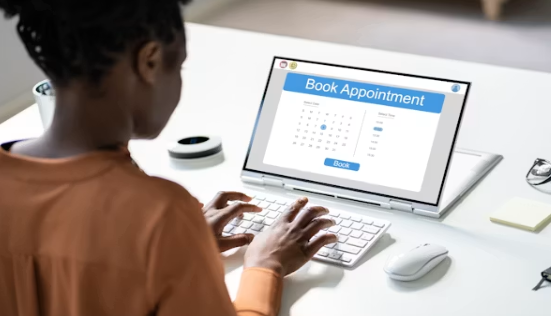
An online booking system allows patients to view available slots and book directly, without requiring a staff member to manage the calendar in real time. For a service like meningococcal vaccination, where the timing of demand is broadly predictable even if the exact volume varies year to year, this substantially changes the shape of the problem.
Patients can self-serve at any time of day, including evenings and weekends when the pharmacy itself may be closed, which spreads booking activity across the full day rather than concentrating it into the hours when phone lines are staffed. Pharmacies can also set capacity limits per session, per day, or per hour, so the system enforces a ceiling on how many appointments can be taken in any given window, rather than staff having to turn people away once they realize they’re overbooked. Slot availability updates in real time as bookings come in, which means patients aren’t left chasing appointments that have already gone, and staff aren’t fielding calls to explain that a slot someone saw online is no longer free.
Digital booking also creates an opportunity to capture relevant information upfront. Eligibility questions tied to the PGD, such as prior vaccination history, allergies, or contraindications, can be built into the booking form itself, so the answers are already available before the patient arrives. This shortens the consultation, reduces the chance of a booked appointment turning into a non-viable one on the day, and gives pharmacists a head start on assessing suitability.
Taken together, these features don’t just make booking more convenient. They convert what would otherwise be a chaotic, staff-intensive surge into a structured, evenly distributed flow of appointments that the pharmacy has actively shaped and controlled.
8.Why Do SMS Reminders Matter During High-Volume Periods?
Missed appointments carry a cost at any time of year, but during a seasonal rush the cost is magnified. Every no-show during a period of high demand is a slot that could have gone to another patient waiting for an appointment, and during peak weeks there is usually no shortage of people who would have taken it.
Automated SMS reminders sent ahead of a booked appointment directly address this. A reminder message a day or two before the appointment reduces the likelihood that the patient simply forgets, particularly for a one-off vaccination booking that isn’t part of a routine the patient has built up over time. It also gives the patient an easy route to reschedule or cancel if their circumstances change, which returns the slot to availability rather than leaving it empty. And from the pharmacy’s side, it removes the need for staff to make manual reminder calls, which during a busy period is time that’s better spent elsewhere.
For a service with a short, high-demand window like meningococcal vaccination, this kind of appointment protection carries more weight than it would for a lower-volume, year-round service where an occasional no-show is easily absorbed.

9.How Does This Tie Into GDPR-Compliant Messaging?
None of this automation is worth implementing if it isn’t handled correctly from a data protection standpoint. Appointment reminders involve processing patients’ contact details and, indirectly, information about their health, which places them squarely within the scope of GDPR and the additional considerations that apply to health data.
A few principles should underpin any SMS or email reminder system used for vaccination bookings. There needs to be a clear, lawful basis for processing patient contact data, with consent captured explicitly at the point of booking rather than assumed. Messages themselves should be limited to what’s operationally necessary: appointment date, time, location, and any preparation instructions, without clinical details that could identify a specific condition or treatment if the message were seen by someone other than the intended recipient. Patients should also have an easy way to opt out of non-essential communications, such as promotional messages, while appointment-critical reminders continue to be sent, since these serve a different function and shouldn’t be bundled together under the same consent.
Pharmacies using a booking platform should check that the reminder messaging built into it reflects these principles by design, rather than relying on a general-purpose SMS marketing tool that wasn’t built with healthcare data in mind. The distinction matters: a marketing platform optimized for promotional messaging and a healthcare booking system’s reminder function are solving different problems, and using the wrong tool for the job introduces risk that’s avoidable with the right infrastructure.

10.Does This Reduce the Burden on Pharmacy Staff?
Indirectly, yes, and the effect compounds during peak periods. The time saved isn’t only about answering fewer phone calls, though that matters. It’s about where staff attention goes once the administrative load is lifted. During a demand spike, pharmacists and technicians who would otherwise be managing a paper diary, chasing rescheduling requests, or making reminder calls are instead free to focus on delivering the vaccination service itself and on the consultations that require their clinical judgment.
This shift also has a knock-on effect on staff experience during what’s already a demanding period. Peak vaccination season is stressful enough without the added strain of a booking system that isn’t keeping pace with demand. Reducing that administrative burden isn’t just an efficiency gain; it’s a factor in staff retention and well-being during the busiest weeks of the year.
11.What Should Pharmacies Look For in a Booking System Ahead of Peak Season?
Ahead of the next seasonal rush, it’s worth reviewing whether the booking system currently in use is actually built for this kind of demand pattern. Key things to check include whether capacity limits can be set per session or per day, so the system enforces safe booking volumes automatically. Automated reminders should be sent with GDPR-appropriate content, limited to what’s operationally necessary and built on a proper legal basis for processing. Patients should be able to reschedule or cancel a booking without needing to phone the pharmacy, since this is often where the administrative burden creeps back in even with a digital system in place. And staff should have visibility over upcoming demand, ideally with enough lead time to plan stock and staffing around expected peaks rather than reacting to them as they arrive.
A system that ticks these boxes doesn’t just make booking easier for patients. It gives pharmacies a genuine planning tool ahead of a demand spike that, unlike many operational challenges in community pharmacy, is largely predictable well in advance.
Meningococcal vaccination demand will keep following broadly the same seasonal pattern each year, driven by the same combination of university entry, school checks, and travel requirements. The pharmacies that manage this well tend to be the ones that have moved the administrative load—booking, reminders, and rescheduling- onto a system built to handle it, so staff time during peak weeks stays focused on the vaccination service itself rather than the logistics surrounding it.
Frequently Asked Questions
How can I tell if my current booking system is ready for the meningococcal vaccination rush?
Check whether it lets you set capacity limits per session or day, sends GDPR-compliant automated reminders, and allows patients to reschedule or cancel without phoning the pharmacy. If it’s missing these, you’re likely to feel the strain once peak season hits.
Why does meningococcal vaccination demand cause more disruption than other seasonal services?
Because university entry, school checks, and travel requirements like Hajj and Umrah all converge within a few weeks, turning a manageable service most of the year into a short, high-volume surge that manual booking systems struggle to absorb.
Will digital booking actually reduce the workload on my staff during peak weeks?
Yes. Patients can self-serve online at any time, capacity limits stop overbooking automatically, and eligibility questions get captured upfront, all of which cuts down the phone calls and admin that would otherwise pull staff away from consultations.
What should I check before using an SMS reminder system for vaccination bookings?
Make sur e it’s built for healthcare data rather than repurposed from a general marketing tool. It should have a clear lawful basis for processing patient contact details, limit message content to appointment details only, and give patients an easy opt-out for non-essential messages.
How much of a difference do SMS reminders make to no-show rates during busy periods?
A meaningful one. Every missed slot during peak season is an appointment that could have gone to another patient waiting for one, so reminders that prompt a reschedule or cancellation help keep availability moving rather than sitting empty.
Is it worth reviewing our booking system now, or can this wait until closer to peak season?
It’s worth reviewing well ahead of time. Meningococcal demand follows a predictable pattern each year, so getting capacity limits, reminders, and self-service rescheduling in place before the rush gives you a planning tool rather than something you’re reacting to under pressure